





How Often Should You Service Your Jeep, Ram, Dodge, or Chrysler?
“`html
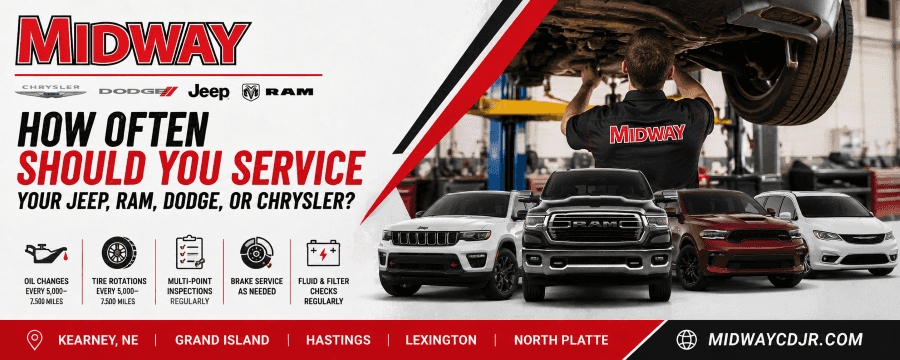
How Often Should You Service Your Jeep, Ram, Dodge, or Chrysler?
Use this general maintenance timeline to help protect your vehicle’s reliability, performance, safety, and long-term value.
Protect Your Vehicle With Routine Maintenance
Whether you drive a Jeep SUV, Ram truck, Dodge performance vehicle, or Chrysler family vehicle, consistent maintenance helps improve reliability, support efficient performance, and identify developing concerns before they become more expensive repairs.
Maintenance Timeline at a Glance
| Mileage Range | Common Services | Why It Matters |
|---|---|---|
| 5,000 to 7,500 Miles | Oil and filter change, tire rotation, fluid checks, and basic inspection | Supports engine health, tire life, and everyday reliability |
| 15,000 to 30,000 Miles | Air filters, battery testing, brake inspection, steering, and suspension checks | Helps identify normal wear before larger repairs are needed |
| 30,000 to 60,000 Miles | Brake fluid, coolant, transmission, differential, and transfer case service as applicable | Helps protect major systems as mileage increases |
Every 5,000 to 7,500 Miles
Oil changes and tire rotations are among the most common services for Jeep, Ram, Dodge, and Chrysler vehicles. Exact intervals may vary by model, engine, oil type, and driving conditions.
- Replace engine oil and filter
- Rotate the tires
- Inspect tire pressure and tread
- Check essential fluid levels
- Inspect windshield wipers
- Check lights, belts, and hoses
Why Tire Rotations Matter
Regular tire rotations promote more even tread wear and help maintain predictable handling throughout Nebraska’s changing seasons.
- Helps extend tire life
- Supports balanced handling
- Promotes more even tread wear
- Provides an opportunity to inspect tire condition
- Helps maintain dependable traction
Essential Services for Everyday Reliability
Help lubricate engine components and reduce unnecessary wear.
Support even tread wear and dependable handling.
Help maintain consistent and confident stopping performance.
Can identify a weakening battery before it leaves you stranded.
Support cooling, braking, transmission, and drivetrain systems.
Helps maintain engine airflow and cleaner cabin air.
Every 15,000 to 30,000 Miles
As your vehicle accumulates mileage, additional components should be inspected and serviced as needed.
- Replace the engine air filter
- Replace the cabin air filter
- Test battery performance
- Inspect brake pads and rotors
- Check steering components
- Inspect suspension components
Why Inspections Matter
Routine inspections give technicians the opportunity to identify leaks, worn components, damaged belts, weak batteries, or brake wear before those concerns affect vehicle performance.
- Helps reduce unexpected repairs
- Supports dependable braking
- Protects ride and handling quality
- Provides added confidence before road trips
- Helps maintain long-term vehicle value
Every 30,000 to 60,000 Miles
Higher-mileage service may include more comprehensive maintenance for braking, cooling, transmission, and drivetrain systems.
Helps support hydraulic brake-system performance.
Helps regulate engine temperature during hot and cold weather.
May help maintain smooth shifting and long-term transmission performance.
May be recommended for vehicles used for towing or demanding driving.
May be required on certain four-wheel-drive models.
Provides a broader review of important vehicle systems.
Maintenance Needs by Vehicle Type
| Vehicle Type | Common Uses | Areas to Monitor |
|---|---|---|
| Jeep SUVs | Commuting, family travel, off-road recreation, and winter driving | Tires, suspension, four-wheel-drive components, and fluids |
| Ram Trucks | Towing, hauling, job site duties, and highway travel | Brakes, transmission, tires, differential, and cooling system |
| Dodge Vehicles | Daily driving, performance driving, and family transportation | Engine oil, brakes, tires, battery, and cooling system |
| Chrysler Vehicles | Family travel, commuting, errands, and longer road trips | Brakes, tires, filters, battery, and climate-control system |
Follow Your Owner’s Manual
Your exact maintenance schedule depends on your vehicle’s model, model year, engine, drivetrain, mileage, and driving conditions. Always consult your owner’s manual or speak with a qualified service advisor for recommendations specific to your vehicle.
Prepare for Nebraska’s Changing Seasons
Hot summers, freezing temperatures, snow, ice, and changing road conditions can place additional demands on your vehicle.
Test the battery, inspect tire tread, check wipers, and verify heating and defrost performance.
Monitor tire pressure, washer fluid, exterior lights, and four-wheel-drive performance.
Inspect the cooling system, battery, air conditioning, tires, and fluid levels.
Check brakes, tires, fluids, lights, and overall vehicle condition before traveling.
Warning Signs Your Vehicle May Need Service
Severe Driving Conditions
Your vehicle may need more frequent service if it is regularly exposed to demanding driving conditions.
- Frequent short trips
- Stop-and-go traffic
- Towing or heavy hauling
- Dusty or gravel roads
- Extreme heat or cold
Keep Maintenance Records
Documented service history can help you track upcoming maintenance, support warranty-related needs, and demonstrate consistent vehicle care when it is time to sell or trade.
Why Choose Midway CDJR for Service?
Schedule Service at Midway Chrysler Dodge Jeep Ram
Keep your Jeep, Ram, Dodge, or Chrysler performing at its best with professional maintenance and repair from the Midway CDJR service team in Kearney.
“`